I hear "I'm sorry" in my office quite often. Which would be cool if my clients had reason to apologize to me. But usually, they don't. They are apologizing to me for crying, for being mad, for being sad, for showing any emotion other than happy, other than "fine." And that's sad. It's sad that we, as people, have learned that it is not quite right to show emotions in front of someone else, that to do so is burdensome. And, probably on a related note, it seems we, as people, have not necessarily learned how to respond when someone does show emotions. I don't know which is the chicken and which is the egg, but I feel pretty confident the two phenomena are likely related.
A linked idea is that of labeling feeling, or expressing emotions, as being "dramatic," or the like. Ask yourself, how often do you see someone showing emotion, and brush them off as being dramatic. How often do you think that versus say it out loud. Now, I live with a teenager, so I most certainly know that sometimes, someone showing emotion is, in fact, being dramatic. But, I also see that we, as a society, default to the "drama" label when really it is that we are having a hard time accepting/dealing with how the other person feels.
Almost without fail, when a client first starts to tear up, they quickly say, "I'm sorry," often with, "I don't know why I'm acting like this," or something of the like. And often, they label themselves as "stupid," or "dramatic." And yet, it never bothers me when people show emotion. In fact, I feel pretty confident that feeling is what makes us human, rather than robots.
So, how do we get to the point where we are no longer showing emotion? I am hesitant to say this next bit, because the last thing I would want to do is come across as the therapists of old, who seemed to default to the "easy answer" of "it's the parents' fault." It's most often nobody's "fault." Things are passed down intergenerationally, and so many different experiences can lead a person to shut down emotions. But, it is true that having parents that are not comfortable with emotion indirectly teaches kids to not be comfortable with emotion. It's generally not the intent, but instead, the fallout.
Certainly, there are some parents that might be very direct about it. They might directly tell their kids, and others in their lives, to stop feeling the way they do, or at least stop showing that they feel that way. They may respond with anger or maybe it is shame that leads them to tell others to "stop it." But the vast majority of the time, it's way more subtle. And it is likely that the parent doesn't even realize that he/she is uncomfortable with emotion, and thereby is teaching their child to be uncomfortable with emotion.
Kids learn to deal with emotion by having role models that show them how to handle them. And, oh my, there are all those memes out there now, from all the child therapy people, that illustrate perfect responses to your child's emotions. Those things make me shudder as the expectation is SO HIGH! I don't personally think the average person can have those perfect responses when his/her 3yo, or 16yo, is having a meltdown of epic proportions. So, please don't hear me as saying you should have those perfect responses. (And, you may respond in shock or dismay in the moment, but you can always go back and "fix it.") But, outside of those epic meltdown moments, your child will learn how to handle emotion as you prove that YOU can handle their emotion. If you are uncomfortable with your own sadness, then you likely will communicate to your child, by accident, that you are uncomfortable with their sadness. That might sound like trying to talk them out of how they feel, just as you try to talk yourself out of how you feel. It might sound like, "Oh, it's not that bad! Look at how lucky we are. There are people who have it way worse." It might sound like, "Oh, don't over-react." It might sound like, "I'll give you something to cry about." And, it might sound like dead silence. I'd say that, a lot of the time, it sounds like trying to talk someone (or yourself) out of the emotion that has arisen. I talk about this in therapy as using the brain to override the heart.
Now, where it gets tricky is that it's not an either/or, so I'm not saying we should never use our brains to manage our emotions. But, I would say that cognitive part, that rationalizing and talking ourself through it, often comes AFTER experiencing the emotion. Not as a means for avoiding experiencing it. The goal is to have both...both the ability to feel, and also the ability to soothe ourselves when our feelings might a little bit off. Anxiety, for example. Anxiety tells us all sorts of lies; we may have fear about things that might really happen, and often we have fears about things very unlikely to happen. So, in those moments, the goal is to feel the fear, not suppress it, but also be able to reassure ourselves of how unlikely our fear is. Same with talking to kids. Your goal is to listen to their fears, so you can truly understand where they are coming from, and THEN help them to see how unlikely their fear is to happen. Those who are blocked from dealing with emotion will go straight to the rational argument, skipping the emotion that is present.
This is feeling hard to explain, for some reason, so I really hope it is coming across in an understandable way. The one thing I will say about "being dramatic" is this...because some of you who put this label on yourself need to hear it...in my experience, those who actually are "being dramatic," do not see themselves as dramatic. Yet, those who label themselves as dramatic, rarely are.
Thursday, October 31, 2019


Tuesday, October 15, 2019
In the end, you have to take advantage of the help you are offered
Particularly in severe eating disorders, it is often the case that the client has been a therapy a long time. And, here's the thing...I really think that eventually, being in therapy, particularly with the same person, for a long time can eventually become counterproductive. Now, I don't have a set definition for "a long time;" it varies from case to case. But, whether it's multiple admissions to a treatment program, or meeting with the same therapist with little progress, I think the ED can accidentally become reinforced. Or maybe not the ED, as much as lack of progress with the ED. If not getting better becomes the norm, will you ever get better?
Eating disorders are hard in that I am quite confident nobody actually wanted one, and nobody chose one. I say frequently, "I'm pretty sure you didn't wake up one day and say, 'An ED! That's a brilliant idea!'" So, I'd never tell someone new to treatment that their ED is their fault, or that they haven't tried hard enough, etc. And again, this is a thing that doesn't have a defined timeline, BUT I would argue that somewhere in treatment, recovery DOES become the responsibility of the person that has the ED. There comes a point where everyone else has done almost all they can, and all that remains is the person with the ED choosing differently. This certainly still doesn't warrant any commentary about the ED being anyone's fault, or someone not trying hard enough. From what I see, it's often not that people who struggle to get better are not trying hard enough. It usually is that their ED is so obnoxious that their efforts pale in comparison to the efforts of the ED voice. BUT, even in that reality, the only way out still is to do the really hard therapy work (not just the changing behaviors work, though that is a huge part of it), so that eventually their efforts do overpower the ED. Even as I write this, I can see how confusing this all is. I can imagine some of you might be thinking, "Seriously, what is she even trying to say?!" Yep, it's that confusing.
Now I know you were just waiting with bated breath to see how I'd tie this to horses. Never fear! I have done it! But only because I really was pondering this on horseback.
I have two horses. One, I fit with hand-in-glove. She's been a real challenge to ride, but we are well matched and, the best way I can explain it is, even though I was heavily involved in backing (aka, breaking) her, she, in 5 years, has only gotten me off her back once, very early on (note: I just jinxed it). Now, mind you, there were rides where she tried (or perhaps she wasn't trying; it's probably not fair to blame her) a number of times, but she and I are just in sync enough that she was never able to unseat me (except in that big extended trot in a national level show when she was 4, LOL; nope, wasn't embarrassing at all, and no Mr. EMT, I didn't need you...hahahaha!). That's Violet. But then there's Daisy.
Now, Daisy is my heart horse. I chose her because, well, she chose me. She is my baby girl. But she has gotten me off a number of times. I mean, rearing does increase the chances of success when you are a horse (but rider was to blame), but overall, she and I just don't sync as well when I'm riding. She also is the first horse I rode consistently, and my first horse. What this means is she is the horse I ruined. I'm told we all ruin our first horses, but I hate that I ruined her. She had to suffer through years of really poor riding, and a couple years ago, she made it clear that she was DONE. And so I retired her. But then, as I came to understand how poorly I had been riding, and changed, I started to pull her out of retirement, to see if I could fix the damage I caused.
I never put her back in training with anyone, and have only taken a few lessons with her. Instead, my approach has been to take lessons on Violet, and then challenge myself to take whatever I have learned on V and train Daisy myself. I say almost every ride, "I broke you. Only I can fix you." Not that "she" needs to be fixed. Our relationship needed to be fixed. My communication needed to be fixed. And until this year, I truly did not learn much from lessons. I would do what I was told, because I'm super good at that, most days. If I rode with a big name trainer, my local trainer had to be there because I'd be so tense (in every way) during the rides that I would not remember a damn thing I had been taught, and the money would have been wasted.
And then I took my horses and went out on my own. Which had its pros and cons, but at minimum, required me to actually start thinking like a trainer when I was riding. I was either going to really learn what I needed to learn on V and apply it to Daisy, or I needed to quit. Now, this was assisted by eventually starting to ride with a big name trainer who was kind and taught in a way I totally get. And so I started to take all that I learned on V, and think about how to apply it to Daisy. I had to choose to really "get it," and I HAD TO if I wanted to fix all I had done to Daisy. (And V, to be fair.)
The coolest part is that I am now proving to myself that I do "get it," and I can train Daisy. Soon we will actually take a lesson again, because you can never figure out everything without eyes on the ground; but all in all, I have done what I set out to do...to actually take advantage of the help I have been given to truly LEARN how to train my horses (and myself). I didn't choose one day to ruin my horses. Hell no. But, I did. I cannot deny that if I want to change it. I, and only I, ruined my horses, particularly Daisy. And now, only I can "fix them." In the end, once you get help, only you can fix/get rid of your eating disorder. In the end, only you can choose whether you will seek a better life (even with its potential cons that your ED babbles on about all the time), and only you can choose to stay sick. You will need lots of help and support to help you get louder and more powerful than that ED voice, but the decision to get better will come in all the small moments between meeting with your providers. But, you can do it. It's possible. And, since I can guess what your ED might have just said to you...you are not likely to be the one that cannot be "fixed" (note: I don't believe there is anyone whose ED cannot be fixed. All EDs are treatable.)
Eating disorders are hard in that I am quite confident nobody actually wanted one, and nobody chose one. I say frequently, "I'm pretty sure you didn't wake up one day and say, 'An ED! That's a brilliant idea!'" So, I'd never tell someone new to treatment that their ED is their fault, or that they haven't tried hard enough, etc. And again, this is a thing that doesn't have a defined timeline, BUT I would argue that somewhere in treatment, recovery DOES become the responsibility of the person that has the ED. There comes a point where everyone else has done almost all they can, and all that remains is the person with the ED choosing differently. This certainly still doesn't warrant any commentary about the ED being anyone's fault, or someone not trying hard enough. From what I see, it's often not that people who struggle to get better are not trying hard enough. It usually is that their ED is so obnoxious that their efforts pale in comparison to the efforts of the ED voice. BUT, even in that reality, the only way out still is to do the really hard therapy work (not just the changing behaviors work, though that is a huge part of it), so that eventually their efforts do overpower the ED. Even as I write this, I can see how confusing this all is. I can imagine some of you might be thinking, "Seriously, what is she even trying to say?!" Yep, it's that confusing.
Now I know you were just waiting with bated breath to see how I'd tie this to horses. Never fear! I have done it! But only because I really was pondering this on horseback.
I have two horses. One, I fit with hand-in-glove. She's been a real challenge to ride, but we are well matched and, the best way I can explain it is, even though I was heavily involved in backing (aka, breaking) her, she, in 5 years, has only gotten me off her back once, very early on (note: I just jinxed it). Now, mind you, there were rides where she tried (or perhaps she wasn't trying; it's probably not fair to blame her) a number of times, but she and I are just in sync enough that she was never able to unseat me (except in that big extended trot in a national level show when she was 4, LOL; nope, wasn't embarrassing at all, and no Mr. EMT, I didn't need you...hahahaha!). That's Violet. But then there's Daisy.
Now, Daisy is my heart horse. I chose her because, well, she chose me. She is my baby girl. But she has gotten me off a number of times. I mean, rearing does increase the chances of success when you are a horse (but rider was to blame), but overall, she and I just don't sync as well when I'm riding. She also is the first horse I rode consistently, and my first horse. What this means is she is the horse I ruined. I'm told we all ruin our first horses, but I hate that I ruined her. She had to suffer through years of really poor riding, and a couple years ago, she made it clear that she was DONE. And so I retired her. But then, as I came to understand how poorly I had been riding, and changed, I started to pull her out of retirement, to see if I could fix the damage I caused.
I never put her back in training with anyone, and have only taken a few lessons with her. Instead, my approach has been to take lessons on Violet, and then challenge myself to take whatever I have learned on V and train Daisy myself. I say almost every ride, "I broke you. Only I can fix you." Not that "she" needs to be fixed. Our relationship needed to be fixed. My communication needed to be fixed. And until this year, I truly did not learn much from lessons. I would do what I was told, because I'm super good at that, most days. If I rode with a big name trainer, my local trainer had to be there because I'd be so tense (in every way) during the rides that I would not remember a damn thing I had been taught, and the money would have been wasted.
And then I took my horses and went out on my own. Which had its pros and cons, but at minimum, required me to actually start thinking like a trainer when I was riding. I was either going to really learn what I needed to learn on V and apply it to Daisy, or I needed to quit. Now, this was assisted by eventually starting to ride with a big name trainer who was kind and taught in a way I totally get. And so I started to take all that I learned on V, and think about how to apply it to Daisy. I had to choose to really "get it," and I HAD TO if I wanted to fix all I had done to Daisy. (And V, to be fair.)
The coolest part is that I am now proving to myself that I do "get it," and I can train Daisy. Soon we will actually take a lesson again, because you can never figure out everything without eyes on the ground; but all in all, I have done what I set out to do...to actually take advantage of the help I have been given to truly LEARN how to train my horses (and myself). I didn't choose one day to ruin my horses. Hell no. But, I did. I cannot deny that if I want to change it. I, and only I, ruined my horses, particularly Daisy. And now, only I can "fix them." In the end, once you get help, only you can fix/get rid of your eating disorder. In the end, only you can choose whether you will seek a better life (even with its potential cons that your ED babbles on about all the time), and only you can choose to stay sick. You will need lots of help and support to help you get louder and more powerful than that ED voice, but the decision to get better will come in all the small moments between meeting with your providers. But, you can do it. It's possible. And, since I can guess what your ED might have just said to you...you are not likely to be the one that cannot be "fixed" (note: I don't believe there is anyone whose ED cannot be fixed. All EDs are treatable.)
Thursday, October 10, 2019
It's Been a Long Time
I must admit...I forgot I had a blog. So much so that it just took me 30 minutes to figure out how to log back into it! So, to catch up...
I don't know why I stopped writing blogs for my business. I will assume I got distracted, and eventually just forgot. But it came back into my mind after making some changes recently. Well, for years I have thought about writing a book. But then, conveniently, Jennifer Gaudiani has now written the book I would have written. It's called Sick Enough, and it is excellent.
But, a few weeks ago, I decided to get off social media. Now, I'm not off off it, as I swear you cannot actually know what is happening in the world if you are not on social media. So, I still have a profile, but I don't follow anyone, and just use it to keep up with companies and groups from whom I need information. And that step freed up some time, so I pretty quickly started to ponder the idea of writing a book again. I have a few topics I considered, but there's some barriers.
I could still write a book on eating disorders, and I think I know enough about them to pull it off. But, it seems 21 years of school burned me out on wanting to dive into the research and summarize some of it, etc. So, that kind of rules out the generally accepted book on an important topic.
In the intervening years since I last wrote consistently on this blog, I have become very involved in the sport of dressage. It is my absolute passion outside of work. And, oh, what a ride it has been. Through a series of events, I have ended up riding by myself the vast majority of the time, and that (is lovely and) gives me a lot of time to think. Over the winter, I started to think of the parallels between eating disorder treatment and dressage training/riding, and I thought, "I could totally write a book on this." But, let's be honest, who is gonna search for the topic "dressage and eating disorders."
Ok, so no book on EDs, no book on the parallels between the ED world and the dressage world. And then, lastly, this week, I decided I should write a book on "all the things your first trainer taught you that were wrong." Ah yes, another good one to do a Google search on, right? I suspect it would be an immensely helpful book, but perhaps not widely accepted, and it probably should be written by someone who knows way more about the sport than I do. Which cycles me back to really only knowing enough about EDs to do a book justice.
And so, painfully slowly, the dots finally connected in my mind, and I remembered this blog. I spend a lot of time on the road between work and the barn, and, as I said, I ride by myself, so I am fortunate to have a lot of quiet time to counterbalance my work life. I absolutely love my job and the real and genuine relationships I have with my clients, and I love my quiet time of riding, and, well, pondering life. I do think a lot about how training of horses overlaps with eating disorders, or treatment of eating disorders. (I really should probably just leave it at, "I think a lot." Because I do. For better or worse.)
I chose to get off social media after I accepted all it really did was increase my anxiety. I easily admit that I social anxiety, and I'm just not convinced social media can be good for that. But more so, I realized I didn't actually care about social media. What I care about is actual relationships. Actual communication. And that it was more important to me to have a couple people that I actually talk to, than 100 people who I didn't really talk with much at all (yes, even while on social media, I had very few "friends"...I tried to make social media as real as possible, only "friending" people I actually knew). So, that's how things are now. I have a couple people I talk with on the phone and go to meals with, and a few more I talk with through messaging. And, I have to tell you, my social anxiety is way less activated. But I miss using social media to express my humor; well, I guess that's really all I miss. In short, I recommend getting off of it. I think relationships between humans really could only be improved by the end of social media, which, I know, won't happen.
So, I'm not sure what topics I will be writing on moving forward. I can say, they mostly will be cooked up while driving on I-15, or while sitting on horseback. Yesterday, I had this whole half-baked idea about writing about fears because I have one horse that is usually unflappable, but girlfriend senses cold fronts and FREAKS OUT. My other horse spooks at....well....air. Literally, air, I promise you. She's a fun one. But this one (Daisy) is chill, except when a cold front is coming in. And so, my usually calm horse turned into a horse kite yesterday. What in the world do I mean by that, you ask? It's when your horse is so high-strung and freaking out about nothing that you swear she is no longer connected to the earth and instead is a 1000lb kite you are attempting to keep connected to the ground (you) by a measly lead rope. This used to be frightening to me. But now I know she's just having a moment, and she has zero intent to hurt me during her moment. And so I hold onto my kite string, and we walk calmly, and distract, and get her focused on work rather than....the wind, or barometric pressure, or whatever she was reacting to. And I guess that does parallel to ED treatment/recovery, because, so often, EDs lead you to "freak out about nothing." Or at least react to something that others do not understand, but it still scares the crap out of you. I couldn't remove the cold front for Daisy, just as we cannot remove facing food. Instead, she had to figure out how to be calm in spite of whatever was scaring her, and we did that through healthy distraction and focus on something else. And, in the end, that cold front came in, and she kept four feet on the ground while I hung out on her back. Whew.
Ah ha! Maybe you thought I couldn't do it (I wasn't even sure where I was going)...this tying of dressage training and eating disorder treatment. But looky there! It all came together in the end. ;) More to come. Because as I said, I think a lot. :)
I don't know why I stopped writing blogs for my business. I will assume I got distracted, and eventually just forgot. But it came back into my mind after making some changes recently. Well, for years I have thought about writing a book. But then, conveniently, Jennifer Gaudiani has now written the book I would have written. It's called Sick Enough, and it is excellent.
But, a few weeks ago, I decided to get off social media. Now, I'm not off off it, as I swear you cannot actually know what is happening in the world if you are not on social media. So, I still have a profile, but I don't follow anyone, and just use it to keep up with companies and groups from whom I need information. And that step freed up some time, so I pretty quickly started to ponder the idea of writing a book again. I have a few topics I considered, but there's some barriers.
I could still write a book on eating disorders, and I think I know enough about them to pull it off. But, it seems 21 years of school burned me out on wanting to dive into the research and summarize some of it, etc. So, that kind of rules out the generally accepted book on an important topic.
In the intervening years since I last wrote consistently on this blog, I have become very involved in the sport of dressage. It is my absolute passion outside of work. And, oh, what a ride it has been. Through a series of events, I have ended up riding by myself the vast majority of the time, and that (is lovely and) gives me a lot of time to think. Over the winter, I started to think of the parallels between eating disorder treatment and dressage training/riding, and I thought, "I could totally write a book on this." But, let's be honest, who is gonna search for the topic "dressage and eating disorders."
Ok, so no book on EDs, no book on the parallels between the ED world and the dressage world. And then, lastly, this week, I decided I should write a book on "all the things your first trainer taught you that were wrong." Ah yes, another good one to do a Google search on, right? I suspect it would be an immensely helpful book, but perhaps not widely accepted, and it probably should be written by someone who knows way more about the sport than I do. Which cycles me back to really only knowing enough about EDs to do a book justice.
And so, painfully slowly, the dots finally connected in my mind, and I remembered this blog. I spend a lot of time on the road between work and the barn, and, as I said, I ride by myself, so I am fortunate to have a lot of quiet time to counterbalance my work life. I absolutely love my job and the real and genuine relationships I have with my clients, and I love my quiet time of riding, and, well, pondering life. I do think a lot about how training of horses overlaps with eating disorders, or treatment of eating disorders. (I really should probably just leave it at, "I think a lot." Because I do. For better or worse.)
I chose to get off social media after I accepted all it really did was increase my anxiety. I easily admit that I social anxiety, and I'm just not convinced social media can be good for that. But more so, I realized I didn't actually care about social media. What I care about is actual relationships. Actual communication. And that it was more important to me to have a couple people that I actually talk to, than 100 people who I didn't really talk with much at all (yes, even while on social media, I had very few "friends"...I tried to make social media as real as possible, only "friending" people I actually knew). So, that's how things are now. I have a couple people I talk with on the phone and go to meals with, and a few more I talk with through messaging. And, I have to tell you, my social anxiety is way less activated. But I miss using social media to express my humor; well, I guess that's really all I miss. In short, I recommend getting off of it. I think relationships between humans really could only be improved by the end of social media, which, I know, won't happen.
So, I'm not sure what topics I will be writing on moving forward. I can say, they mostly will be cooked up while driving on I-15, or while sitting on horseback. Yesterday, I had this whole half-baked idea about writing about fears because I have one horse that is usually unflappable, but girlfriend senses cold fronts and FREAKS OUT. My other horse spooks at....well....air. Literally, air, I promise you. She's a fun one. But this one (Daisy) is chill, except when a cold front is coming in. And so, my usually calm horse turned into a horse kite yesterday. What in the world do I mean by that, you ask? It's when your horse is so high-strung and freaking out about nothing that you swear she is no longer connected to the earth and instead is a 1000lb kite you are attempting to keep connected to the ground (you) by a measly lead rope. This used to be frightening to me. But now I know she's just having a moment, and she has zero intent to hurt me during her moment. And so I hold onto my kite string, and we walk calmly, and distract, and get her focused on work rather than....the wind, or barometric pressure, or whatever she was reacting to. And I guess that does parallel to ED treatment/recovery, because, so often, EDs lead you to "freak out about nothing." Or at least react to something that others do not understand, but it still scares the crap out of you. I couldn't remove the cold front for Daisy, just as we cannot remove facing food. Instead, she had to figure out how to be calm in spite of whatever was scaring her, and we did that through healthy distraction and focus on something else. And, in the end, that cold front came in, and she kept four feet on the ground while I hung out on her back. Whew.
Ah ha! Maybe you thought I couldn't do it (I wasn't even sure where I was going)...this tying of dressage training and eating disorder treatment. But looky there! It all came together in the end. ;) More to come. Because as I said, I think a lot. :)
Monday, May 16, 2016
Just Keep On, Keepin' On
It has been a long time since I have written a post here. Life, both professional and personal, has been very busy. Clearly! ;)
And I'm not thrilled about the content of today's post; it's kind of heart-breaking, actually. I was made aware by a client today that there are some really awful reviews of me online. One just posted last week. And it is hard to know how to respond to these. Well, in reality, there is no way to respond, and I guess that is simply what is difficult about the digital world; providers cannot respond to reviews like business owners can. The sites don't even make a space for doing so. So, I'm going to try to respond to some of the reviews. I'm not sure all the reviews are written by actual clients; only one can I actually identify who wrote it. And, sadly, there is an individual in my life, not directly connected to me, who has motivation to cause harm, so I can never know for sure if what is written is by actual clients, or by a non-client.
That said, I'll start by simply saying that if you are a past or current client with a complaint, I am more than willing to try to respond to your complaint as effectively as I can. I cannot resolve any complaints written on the internet, as they are anonymous. And even in the case where I know who wrote it, I really cannot contact the author without potentially then being accused of harassment. It's a tricky position, ethically. I WANT to be able to address concerns, but I don't know the avenue to do so.
So, to address some of the complaints:
When working with teenagers, I require family therapy. I will not work with a teenager without family therapy as part of the treatment process, and this has always been the case. Parents always see how I work with their kids, as they are in the session at least every other week. In therapy, I am equally confrontational of parents as I am kids; my goal is to address the problem and facilitate change, and never is a problem one-sided. As a parent, I imagine (and have experienced!) it is hard to be challenged, but it is equally challenging for the child to be challenged week after week to change dangerous behaviors. I also will not continue to treat a client that is not getting better under my care. Because I treat eating disorders, a higher level of care is always available, and if a client is not improving within 2-3 weeks, I refer to a higher level of care to ensure progress.
Another review boldly states I identify myself as atheist and have no tolerance for any other views. I am not atheist, and never have been, and I feel that alone adequately addresses that review (yes, I'm a little frustrated by bald-face lies). Quite honestly, it has never mattered enough to me to identify a religious stance (it's possible my Facebook page actually says, "H*&% if I know") My goal in addressing religious issues is to allow the client to process his/her own beliefs. My beliefs are not remotely relevant to a client's work, though I will answer when asked my if I believe in a particular religion or thing.
A couple reviews refer to me being immature. I guess I don't know how to best respond to that. I hope that is not the case, but it doesn't really make sense for me to claim I'm not. So, I guess all I can say is that, I'm confident I'm immature at times, but I welcome contact with anyone, and if I am then determined to be immature, I can respect that.
I would agree with those who say I am reactive and rigid. These things are true. I am reactive to my clients doing harmful things. I am reactive to clients lashing out at me, in the rare instances...less than 5...where that has occurred. I am reactive to people treating other people poorly. I am not a therapist who believes in sitting back and just listening; if I see something that i think is interfering with my client enjoying his/her life, I respectfully (or at least that is my intention!) challenge him/her. I fully understand my job would be "easier" if I just wouldn't challenge as much as I do, but I honestly cannot stomach taking people's money to mostly just listen. People hire me to help. And at times, my help is listening. But it is more than that also, especially with the population I treat.
Now for rigidity...I am rigid as a person. I tell clients this often, in fact! It works for me in this career as it is beneficial to be rigid with eating disorder behaviors. The other place I am rigid is in expecting clients to pay for services and for missed appointments. I understand that other providers let things like this go, and I am fully aware that my adherence to a strict payment policy opens me up for criticism. After all therapists are supposed to be always understanding and compassionate, right?! But, we also run businesses. It is surprising to me how therapists are often not seen as the professionals we are. And we are running a business. If a client late cancels or no shows, it effects our business. I go over my policies repeatedly so clients are fully aware of charges for late cancellations and no shows, but still, some are offended when I adhere to those policies. But, I believe that if we, as therapists, continue to allow people to cancel on us without consequence, we are only reinforcing that our time is not important. Now, this is not to say there are not valid reasons for late cancellations, and there is some flexibility in applying charges, but overall, I'm quite rigid with the financial policies. I do not want to be accused of favoritism, so all clients get the same penalty, which has frustrated a few clients. Overall, my time, a therapist's time, is important; not MORE important than anyone else, but equally important. I have managed to flub my schedule a couple times in my career (being rigid helps avoid this problem also). And, each time, I have given myself the same penalty I give clients, meaning I work for free when I next see the client. I am rigid, but equally rigid; I expect the same of myself that I do of others.
All therapists make mistakes (I hope!). At times, I have put myself in the position of apologizing for a reaction or an action, whether that was in group or in an individual session. I see those situations as (difficult and) an opportunity to demonstrate that repair is possible in relationships. I care deeply about the work I do, and the clients with whom I work. At times, the best action is to end a professional relationship due to incompatibility with a client, but the majority of the time, there is much to be learned from working through conflict/disagreement/hurt feelings, etc. Nobody is all good, or all bad. The vast majority of, if not all, humans are good with some kinda bad, and some really bad moments. I have had some really bad moments in my career, and for each one, I have tried to initiate repair. If that is what I am teaching clients to do, it is what I must do myself, even though it's hard.
To have my work, identity, and personality attacked is painful, but part of the job, I guess. I treat eating disorders. I do my best to not anger my clients, but to instead make it clear I will stand strong and fight their disorder tooth and nail. Sometimes, maybe that comes across in an unintended manner. As far as I know, I have not made as many clients angry as there are negative reviews, so that is part of what leaves me unsure of the reviews themselves. Regardless, I hope that this really long post (!) is in some way beneficial. Earlier today, of course I was tempted to just hang it up, take myself out of the public eye, but then, as I went on a walk to try to ground myself, I realized that what I would advise a client would be "keep doing what you are doing, with whoever wants you to do it with them, and let the rest of it go." If I do good work, I'll help people. If I don't, my career will die a natural death. If it dies a natural death, it is likely for the best. All this "being grounded" stuff is hard, but it's what I advise clients to do, to practice, so here goes....
And I'm not thrilled about the content of today's post; it's kind of heart-breaking, actually. I was made aware by a client today that there are some really awful reviews of me online. One just posted last week. And it is hard to know how to respond to these. Well, in reality, there is no way to respond, and I guess that is simply what is difficult about the digital world; providers cannot respond to reviews like business owners can. The sites don't even make a space for doing so. So, I'm going to try to respond to some of the reviews. I'm not sure all the reviews are written by actual clients; only one can I actually identify who wrote it. And, sadly, there is an individual in my life, not directly connected to me, who has motivation to cause harm, so I can never know for sure if what is written is by actual clients, or by a non-client.
That said, I'll start by simply saying that if you are a past or current client with a complaint, I am more than willing to try to respond to your complaint as effectively as I can. I cannot resolve any complaints written on the internet, as they are anonymous. And even in the case where I know who wrote it, I really cannot contact the author without potentially then being accused of harassment. It's a tricky position, ethically. I WANT to be able to address concerns, but I don't know the avenue to do so.
So, to address some of the complaints:
When working with teenagers, I require family therapy. I will not work with a teenager without family therapy as part of the treatment process, and this has always been the case. Parents always see how I work with their kids, as they are in the session at least every other week. In therapy, I am equally confrontational of parents as I am kids; my goal is to address the problem and facilitate change, and never is a problem one-sided. As a parent, I imagine (and have experienced!) it is hard to be challenged, but it is equally challenging for the child to be challenged week after week to change dangerous behaviors. I also will not continue to treat a client that is not getting better under my care. Because I treat eating disorders, a higher level of care is always available, and if a client is not improving within 2-3 weeks, I refer to a higher level of care to ensure progress.
Another review boldly states I identify myself as atheist and have no tolerance for any other views. I am not atheist, and never have been, and I feel that alone adequately addresses that review (yes, I'm a little frustrated by bald-face lies). Quite honestly, it has never mattered enough to me to identify a religious stance (it's possible my Facebook page actually says, "H*&% if I know") My goal in addressing religious issues is to allow the client to process his/her own beliefs. My beliefs are not remotely relevant to a client's work, though I will answer when asked my if I believe in a particular religion or thing.
A couple reviews refer to me being immature. I guess I don't know how to best respond to that. I hope that is not the case, but it doesn't really make sense for me to claim I'm not. So, I guess all I can say is that, I'm confident I'm immature at times, but I welcome contact with anyone, and if I am then determined to be immature, I can respect that.
I would agree with those who say I am reactive and rigid. These things are true. I am reactive to my clients doing harmful things. I am reactive to clients lashing out at me, in the rare instances...less than 5...where that has occurred. I am reactive to people treating other people poorly. I am not a therapist who believes in sitting back and just listening; if I see something that i think is interfering with my client enjoying his/her life, I respectfully (or at least that is my intention!) challenge him/her. I fully understand my job would be "easier" if I just wouldn't challenge as much as I do, but I honestly cannot stomach taking people's money to mostly just listen. People hire me to help. And at times, my help is listening. But it is more than that also, especially with the population I treat.
Now for rigidity...I am rigid as a person. I tell clients this often, in fact! It works for me in this career as it is beneficial to be rigid with eating disorder behaviors. The other place I am rigid is in expecting clients to pay for services and for missed appointments. I understand that other providers let things like this go, and I am fully aware that my adherence to a strict payment policy opens me up for criticism. After all therapists are supposed to be always understanding and compassionate, right?! But, we also run businesses. It is surprising to me how therapists are often not seen as the professionals we are. And we are running a business. If a client late cancels or no shows, it effects our business. I go over my policies repeatedly so clients are fully aware of charges for late cancellations and no shows, but still, some are offended when I adhere to those policies. But, I believe that if we, as therapists, continue to allow people to cancel on us without consequence, we are only reinforcing that our time is not important. Now, this is not to say there are not valid reasons for late cancellations, and there is some flexibility in applying charges, but overall, I'm quite rigid with the financial policies. I do not want to be accused of favoritism, so all clients get the same penalty, which has frustrated a few clients. Overall, my time, a therapist's time, is important; not MORE important than anyone else, but equally important. I have managed to flub my schedule a couple times in my career (being rigid helps avoid this problem also). And, each time, I have given myself the same penalty I give clients, meaning I work for free when I next see the client. I am rigid, but equally rigid; I expect the same of myself that I do of others.
All therapists make mistakes (I hope!). At times, I have put myself in the position of apologizing for a reaction or an action, whether that was in group or in an individual session. I see those situations as (difficult and) an opportunity to demonstrate that repair is possible in relationships. I care deeply about the work I do, and the clients with whom I work. At times, the best action is to end a professional relationship due to incompatibility with a client, but the majority of the time, there is much to be learned from working through conflict/disagreement/hurt feelings, etc. Nobody is all good, or all bad. The vast majority of, if not all, humans are good with some kinda bad, and some really bad moments. I have had some really bad moments in my career, and for each one, I have tried to initiate repair. If that is what I am teaching clients to do, it is what I must do myself, even though it's hard.
To have my work, identity, and personality attacked is painful, but part of the job, I guess. I treat eating disorders. I do my best to not anger my clients, but to instead make it clear I will stand strong and fight their disorder tooth and nail. Sometimes, maybe that comes across in an unintended manner. As far as I know, I have not made as many clients angry as there are negative reviews, so that is part of what leaves me unsure of the reviews themselves. Regardless, I hope that this really long post (!) is in some way beneficial. Earlier today, of course I was tempted to just hang it up, take myself out of the public eye, but then, as I went on a walk to try to ground myself, I realized that what I would advise a client would be "keep doing what you are doing, with whoever wants you to do it with them, and let the rest of it go." If I do good work, I'll help people. If I don't, my career will die a natural death. If it dies a natural death, it is likely for the best. All this "being grounded" stuff is hard, but it's what I advise clients to do, to practice, so here goes....
Monday, October 20, 2014
Detachment, without disconnection
 I recently completed a training that addressed attachment, detachment, connection and disconnection, and it led me to think of these concepts in a deeper way. Detachment sounds like such a negative thing. But, in reality, we all need to detach sometimes. So, how does connection/disconnection fit in? And how do all four go together?
Well, it's easy to think of being attached and connected. In that type of relationship, you are both physically and emotionally attached to the other person (or animal), and you are tuned in to that person/animal. You are aware of what he/she is doing.
But, can you be attached and disconnected? Sure. How that might look is that there is physical contact in the relationship, but no deeper awareness of the other, or awareness of o
ne's impact on the other. It may look like you are connected, but if your mind is elsewhere, really you are not. You can imagine kids like this, perhaps. They might allow others to hold them, or hold their hand, but when you are with that kid, you know they are not really present with you. Maybe they look away, or they are playing a game with themselves, fairly oblivious to those around them. Sadly, adult partners can also be this way, and it can be confusing because it looks good on the surface, but doesn't feel good. And, lastly, I would argue an eating disorder can create this. It appears the one with the ED is present in relationships....they make the right moves....but, really, sometimes they are connected to their ED more than those in their lives.
So, now, detached and disconnected seems to go pretty much without description, much as attached and connected does. I think this is the person who is isolated, not letting the relationship in at all.
Okay, so that brings being detached, but connected. In the training, the task was to physically detach from the horse... meaning, we were to no longer touch the horse or communicate in any significant way....but, we were to remain connected. So, our task was to keep the horse tuned in to us, while we backed away. For another example, in dog terms, perhaps this is telling your dog to stay, while you back away. You want to maintain the dogs attention, without having to be attached.
So, how do we apply this concept to human relationships? In what situations might we need to detach, but remain connected. Well, a big part would be linked to our ability to bring our connections with us even when we need to be separate. So, can we hold onto the love from another, even when physically separated? Can we allow that love to comfort us, without the person being there? Perhaps there are times where we need to disconnect from the actions of another, but remain connected to them, rather than simply throwing the relationship away. I can see this definitely being present in some of the more extreme stages of an eating disorder. It feels terrible, but the family might need to detach from the person with the eating disorder, so they are no longer hooked into care taking or unintentionally reinforcing the disorder, while remaining attached to the person inside, their loved one. These family members would not walk away, but instead respond as soon as their loved one showed a commitment to change.
Now, all this is pretty much me musing "out loud." I'd be interested in what some of you think about this concept!
Wednesday, September 10, 2014
But, What Do YOU Want?

As you might guess, this is a not uncommon phenomenon with teenagers. Teenagers do not want to be told what to do! At least most of the time... So, being the therapist to a teenager carries the risk of just being the next adult in line to have authority worthy of bucking. And the last thing a therapist wants to create is
a power struggle.

Of course, this can also be applied directly to eating disorders. What does the eating disorder client want more? To be thin? To feel in control? To be numb? To have good relationships? To enjoy life? To have integrity? To be honest?
If you will identify what you truly want, you can then measure your behaviors against that. Is what you are doing in any given moment consistent with your long-term desires? If yes, fantastic! If no, you have to decide whether this means your desire has changed, or something is overriding it. And, you have to distinguish between what you want in that moment, versus in the big picture.
This way, it no longer matters what anyone else wants, and whether you want to follow their direction; it only matters that you are pursuing what you want.
Update, a long time coming
Today, I was asked to write a blog post. Now, I asked the requestor to give me a topic, and her ever-helpful response was, "I dunno; you are the one with a PhD." Well, thanks for that help! ;) So, I will write two blog posts, in a flurry of posting!
 First, an update:
Equine therapy session formally began on June 1, and it has been a wonderful thing to be a part of. Violet was added to the herd mid-June, and has been a wonderful addition. It is amazing what can happen with horses present. Often, my clients miss the grin I get on my face when they turn to see what one of the horses has just done that is perfectly timed. It is phenomenal to watch the horses work their magic, and I feel very honored to be a part of these sessions. Sometimes, it's a client learning a new skill with the help of an equine partner; other times, it is the horse and client standing forehead to forehead in silence. Throwing rocks has also become a favorite pastime, and fortunately, my corral has no shortage of rocks. There's just something to standing in nature, next to these beautiful animals, that is amazing; I love it.
In the downtown office, Angela Hicks is hard at work building up her practice, taking on a number of eating disorder clients. I am so thankful to have her on board to help decrease wait times for clients seeking treatment. It is so hard to tell someone with an eating disorder that they have to wait on a wait list, so it feels very good to be able to get people in quickly. And, it's fun to have a partner in crime!
So, that's the update. Now on to a post about a specific topic, in spite of receiving NO HELP from the person requesting a post!!! ;)
 First, an update:
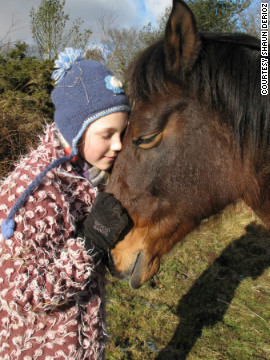
Equine therapy session formally began on June 1, and it has been a wonderful thing to be a part of. Violet was added to the herd mid-June, and has been a wonderful addition. It is amazing what can happen with horses present. Often, my clients miss the grin I get on my face when they turn to see what one of the horses has just done that is perfectly timed. It is phenomenal to watch the horses work their magic, and I feel very honored to be a part of these sessions. Sometimes, it's a client learning a new skill with the help of an equine partner; other times, it is the horse and client standing forehead to forehead in silence. Throwing rocks has also become a favorite pastime, and fortunately, my corral has no shortage of rocks. There's just something to standing in nature, next to these beautiful animals, that is amazing; I love it.
In the downtown office, Angela Hicks is hard at work building up her practice, taking on a number of eating disorder clients. I am so thankful to have her on board to help decrease wait times for clients seeking treatment. It is so hard to tell someone with an eating disorder that they have to wait on a wait list, so it feels very good to be able to get people in quickly. And, it's fun to have a partner in crime!
So, that's the update. Now on to a post about a specific topic, in spite of receiving NO HELP from the person requesting a post!!! ;)
Subscribe to:
Posts (Atom)